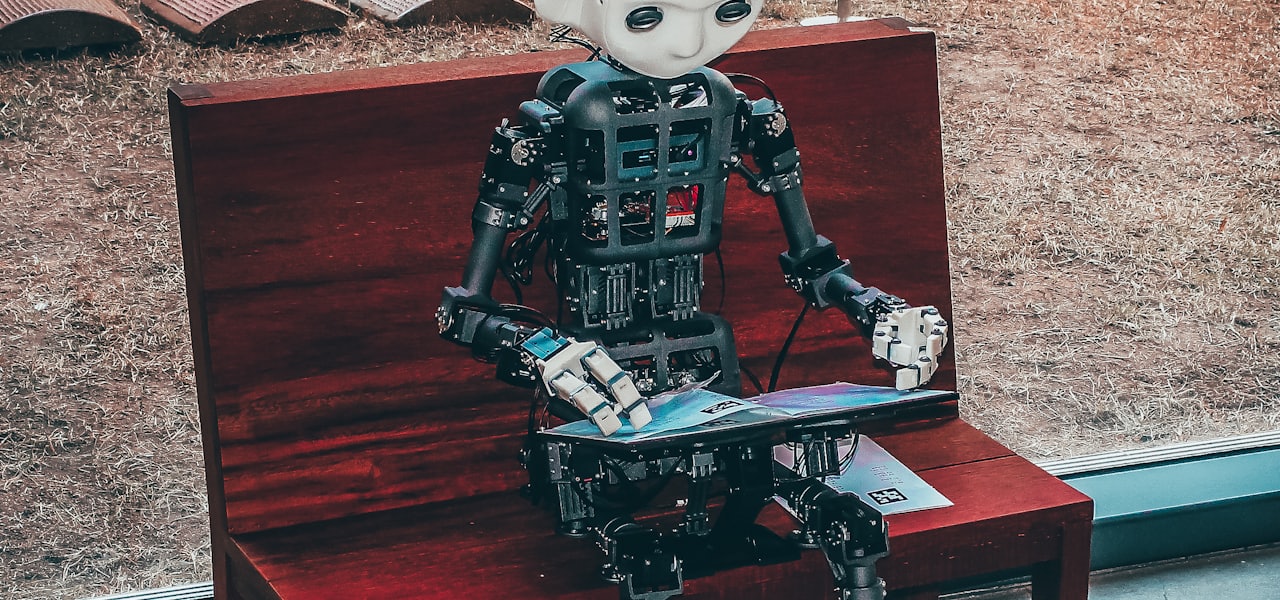
Artificial intelligence is used by many different businesses and organizations. It is widely used in the financial sector, especially by accounting firms, to help detect fraud. In 2022, PricewaterhouseCoopers reported that fraud has impacted 46% of all businesses in the world. The shift from working in person to working from home has brought increased access to data. According to an FTC (Federal Trade Commission) study from 2022, customers reported fraud of approximately $5.8 billion in 2021, an increase of 70% from the year before. The majority of these scams were imposter scams and online shopping frauds. Furthermore, artificial intelligence plays a crucial role in developing advanced algorithms and machine learning models that enhance fraud detection systems, enabling businesses to stay ahead of evolving fraudulent tactics in an increasingly digital landscape. == Tools == === Expert systems === Expert systems were first designed in the 1970s as an expansion into artificial intelligence technologies. Their design is based on the premise of decreasing potential user error in decision-making and emulating mental reasoning used by experts in a particular field. They differentiate themselves from traditional linear reasoning models by separating identified points in data and processing them individually at the same time. Though, these systems do not rely purely on machine-learned intelligence. Information regarding rules, practices, and procedures in the form of "if-then" statements are implemented into the programming of the system. Users interact with the system by feeding information into the system either through direct entry or import of external data. An inference system compares the information provided by the user with corresponding rules that are believed to specifically apply to the situation. Using this information and the corresponding rules will be used to create a solution to the user's query. Expert systems will generally not operate properly when the common procedures for a specified situation are ambiguous due to the need for well-defined rules. Implementation of expert systems in accounting procedures is feasible in areas where professional judgment is required. Situations where expert systems are applicable include investigations into transactions that involve potential fraudulent entries, instances of going concern, and the evaluation of risk in the planning stages of an audit. === Continuous auditing === Continuous auditing is a set of processes that assess various aspects of information gathered in an audit to classify areas of risk and potential weaknesses in financial Internal controls at a more frequent rate than traditional methods. Instead of analyzing recorded transactions and journal entries periodically, continuous auditing focuses on interpreting the character of these actions more frequently. The frequency of these processes being undertaken as well as highlighting areas of importance is up to the discretion of their implementer, who commonly makes such decisions based on the level of risk in the accounts being evaluated and the goals of implementing the system. Performance of these processes can occur as frequently as being nearly instantaneous with an entry being posted. The processes involved with analyzing financial data in continuous auditing can include the creation of spreadsheets to allow for interactive information gathering, calculation of financial ratios for comparison with previously created models, and detection of errors in entered figures. A primary goal of this practice is to allow for quicker and easier detection of instances of faulty controls, errors, and instances of fraud. === Machine learning and deep learning === The ability of machine learning and deep learning to swiftly and effectively sort through vast volumes of data in the forms of various documents relevant to companies and documents being audited makes them applicable to the domains of audit and fraud detection. Examples of this include recognizing key language in contracts, identifying levels of risk of fraud in transactions, and assessing journal entries for misstatement. == Applications == === 'Big 4' Accounting Firms === Deloitte created an Al-enabled document-reviewing system in 2014. The system automates the method of reviewing and extracting relevant information from different business documents. Deloitte claims that this innovation has made a difference by reducing time spent going through lawful contract documents, invoices, money-related articulations, and board minutes by up to 50%. Working with IBM's Watson, Deloitte is developing cognitive-technology-enhanced commerce arrangements for its clients. LeasePoint is fueled by IBM TRIRIGA (this product evolved into IBM Maximo Real Estate and Facilities) and uses Deloitte's industrial information to create an end-to-end leasing portfolio. Automated Cognitive Resource Assessment employs IBM's Maximo innovation to progress the proficiency of asset inspection. Ernst and Young (EY) connected Al to the investigation of lease contracts. EY (Australia) has also received Al-enabled auditing technology. Collaborating with H20.ai, PwC developed an Al-enabled framework (GL.ai) capable of analyzing reports and preparing reports. PwC claims to have made a significant investment in normal dialect processing (NLP), an Al-enabled innovation to process unstructured information efficiently. KPMG built a portfolio of Al instruments, called KPMG Ignite, to upgrade trade decisions and forms. Working with Microsoft and IBM Watson, KPMG is creating instruments to coordinate Al, data analytics, Cognitive Technologies, and RPA. == Advantages == === Efficiency === The process of auditing an entity in an attempt to detect fraudulent activity requires the repeating of investigatory processes until an error or misstatement may be identified. Under traditional methods, these processes would be carried out by a human being. Proponents of artificial intelligence in fraud detection have stated that these traditional methods are inefficient and can be more quickly accomplished with the aid of an intelligent computing system. A survey of 400 chief executive officers created by KPMG in 2016 found that approximately 58% believed that artificial intelligence would play a key role in making audits more efficient in the future. === Data interpretation === Higher levels of fraud detection entail the use of professional judgement to interpret data. Supporters of artificial intelligence being used in financial audits have claimed that increased risks from instances of higher data interpretation can be minimized through such technologies. One necessary element of an audit of financial statements that requires professional judgement is the implementation of thresholds for materiality. Materiality entails the distinction between errors and transactions in financial statements that would impact decisions made by users of those financial statements. The threshold for materiality in an audit is set by the auditor based on various factors. Artificial intelligence has been used to interpret data and suggest materiality thresholds to be implemented through the use of expert systems. === Decreased costs === Those in favor of using artificial intelligence to complete investigations of fraud have stated that such technologies decrease the amount of time required to complete tasks that are repetitive. The claim further states that such efficiencies allow for lowered resource requirements, which can then be further spent on tasks that have not been fully automated. The audit firm Ernst & Young has posited these claims by declaring that their deep learning systems have been used to reduce time spent on administrative tasks by analyzing relevant audit documents. According to the firm, this has allowed their employees to focus more on judgement and analysis. == Disadvantages == === Job Displacement === The inescapable reception of computer based intelligence and robotization advancements might prompt critical work relocation across different enterprises. As artificial intelligence frameworks become more equipped for performing undertakings customarily completed by people, there is a worry that specific work jobs could become out of date, prompting joblessness and financial imbalance. === Initial investment requirement === Along with a knowledge of coding and building systems through computer programs, we are seeing the advantages of these systems, but since they are so new, they require a large investment to start building such a system. Any firm that is planning on implementing an AI system to detect fraud must hire a team of data scientists, along with upgrading their cloud system and data storage. The system must be consistently monitored and updated to be the most efficient form of itself, otherwise the likelihood of fraud being involved in those transactions increases. If one does not initially invest in such a syst
Visual descriptor
In computer vision, visual descriptors or image descriptors are descriptions of the visual features of the contents in images, videos, or algorithms or applications that produce such descriptions. They describe elementary characteristics such as the shape, the color, the texture or the motion, among others. == Introduction == As a result of the new communication technologies and the massive use of Internet in our society, the amount of audio-visual information available in digital format is increasing considerably. Therefore, it has been necessary to design some systems that allow us to describe the content of several types of multimedia information in order to search and classify them. The audio-visual descriptors are in charge of the contents description. These descriptors have a good knowledge of the objects and events found in a video, image or audio and they allow the quick and efficient searches of the audio-visual content. This system can be compared to the search engines for textual contents. Although it is relatively easy to find text with a computer, it is much more difficult to find concrete audio and video parts. For instance, imagine somebody searching a scene of a happy person. The happiness is a feeling and it is not evident its shape, color and texture description in images. The description of the audio-visual content is not a superficial task and it is essential for the effective use of this type of archives. The standardization system that deals with audio-visual descriptors is the MPEG-7 (Motion Picture Expert Group - 7). == Types == Descriptors are the first step to find out the connection between pixels contained in a digital image and what humans recall after having observed an image or a group of images after some minutes. Visual descriptors are divided in two main groups: General information descriptors: contain low level descriptors which give a description about color, shape, regions, textures and motion. Specific domain information descriptors: give information about objects and events in the scene. A concrete example would be face recognition. === General information descriptors === General information descriptors consist of a set of descriptors that covers different basic and elementary features like: color, texture, shape, motion, location and others. This description is automatically generated by means of signal processing. ==== Color ==== It's the most basic quality of visual content. Five tools are defined to describe color. The three first tools represent the color distribution and the last ones describe the color relation between sequences or group of images: Dominant color descriptor (DCD) Scalable color descriptor (SCD) Color structure descriptor (CSD) Color layout descriptor (CLD) Group of frame (GoF) or group-of-pictures (GoP) ==== Texture ==== It's an important quality in order to describe an image. The texture descriptors characterize image textures or regions. They observe the region homogeneity and the histograms of these region borders. The set of descriptors is formed by: Homogeneous texture descriptor (HTD) Texture browsing descriptor (TBD) Edge histogram descriptor (EHD) ==== Shape ==== It contains important semantic information due to human's ability to recognize objects through their shape. However, this information can only be extracted by means of a segmentation similar to the one that the human visual system implements. Nowadays, such a segmentation system is not available yet, however there exists a serial of algorithms which are considered to be a good approximation. These descriptors describe regions, contours and shapes for 2D images and for 3D volumes. The shape descriptors are the following ones: Region-based shape descriptor (RSD) Contour-based shape descriptor (CSD) 3-D shape descriptor (3-D SD) ==== Motion ==== It's defined by four different descriptors which describe motion in video sequence. Motion is related to the objects motion in the sequence and to the camera motion. This last information is provided by the capture device, whereas the rest is implemented by means of image processing. The descriptor set is the following one: Motion activity descriptor (MAD) Camera motion descriptor (CMD) Motion trajectory descriptor (MTD) Warping and parametric motion descriptor (WMD and PMD) ==== Location ==== Elements location in the image is used to describe elements in the spatial domain. In addition, elements can also be located in the temporal domain: Region locator descriptor (RLD) Spatio temporal locator descriptor (STLD) === Specific domain information descriptors === These descriptors, which give information about objects and events in the scene, are not easily extractable, even more when the extraction is to be automatically done. Nevertheless, they can be manually processed. As mentioned before, face recognition is a concrete example of an application that tries to automatically obtain this information. == Descriptors applications == Among all applications, the most important ones are: Multimedia documents search engines and classifiers. Digital library: visual descriptors allow a very detailed and concrete search of any video or image by means of different search parameters. For instance, the search of films where a known actor appears, the search of videos containing the Everest mountain, etc. Personalized electronic news service. Possibility of an automatic connection to a TV channel broadcasting a soccer match, for example, whenever a player approaches the goal area. Control and filtering of concrete audiovisual content, like violent or pornographic material. Also, authorization for some multimedia content.
Gerrit (software)
Gerrit ( GERR-it) is a free, web-based team code collaboration tool. Software developers in a team can review each other's modifications on their source code using a Web browser and approve or reject those changes. It integrates closely with Git, a distributed version control system. Gerrit is a fork of Rietveld, a code review tool for Subversion. Both are named after Dutch designer Gerrit Rietveld. == History == Originally written in Python like Rietveld, it is now written in Java (Java EE Servlet) with SQL since version 2 and a custom-made Git-based database (NoteDb) since version 3. In versions 2.0–2.16 Gerrit used Google Web Toolkit for its browser-based front-end. After being developed and used in parallel with GWT for versions 2.14–2.16, a new Polymer web UI replaced the GWT UI in version 3.0.
Quickly (software)
Quickly is a framework for creating software programs for a Linux distribution using Python, PyGTK, Glade Interface Designer and Desktop Couch. It then allows for easy publishing using bzr and Launchpad. Quickly is designed to speed up the start of new projects with the use of templates, not only for programs but for any type of project. These templates are used to automate project configuration and maintenance. Delegating into templates and not into a specific library allows projects created using Quickly not to require dependencies on any particular library or runtime of Quickly itself. The project was started by Rick Spencer after his frustration as a beginner Ubuntu developer. == Updates == Last available software update is on 2013-01-31 for Ubuntu 11.04.
ObjectVision
ObjectVision was a forms-based programming language and environment for Windows 3.x developed by Borland. The latest version, 2.1, was released in 1992. An ObjectVision application is composed by forms designed in a graphic way that contains objects and events to provide interactivity. Forms are connected together with logic in the form of decision trees. ObjectVision applications also can interact with databases using multiple engines, like Paradox and dBase. A finished project is saved as an OVD file, that is executed by an interpreted runtime that can be freely distributed. ObjectVision was not used broadly except in some niche segments, but the visual programming ideas were the basis for Borland Delphi.
Hyperparameter (machine learning)
In machine learning, a hyperparameter is a parameter that can be set in order to define any configurable part of a model's learning process. Hyperparameters can be classified as either model hyperparameters (such as the topology and size of a neural network) or algorithm hyperparameters (such as the learning rate and the batch size of an optimizer). These are named hyperparameters in contrast to parameters, which are characteristics that the model learns from the data. Hyperparameters are not required by every model or algorithm. Some simple algorithms such as ordinary least squares regression require none. However, the LASSO algorithm, for example, adds a regularization hyperparameter to ordinary least squares which must be set before training. Even models and algorithms without a strict requirement to define hyperparameters may not produce meaningful results if these are not carefully chosen. However, optimal values for hyperparameters are not always easy to predict. Some hyperparameters may have no meaningful effect, or one important variable may be conditional upon the value of another. Often a separate process of hyperparameter tuning is needed to find a suitable combination for the data and task. As well as improving model performance, hyperparameters can be used by researchers to introduce robustness and reproducibility into their work, especially if it uses models that incorporate random number generation. == Considerations == The time required to train and test a model can depend upon the choice of its hyperparameters. A hyperparameter is usually of continuous or integer type, leading to mixed-type optimization problems. The existence of some hyperparameters is conditional upon the value of others, e.g. the size of each hidden layer in a neural network can be conditional upon the number of layers. === Difficulty-learnable parameters === The objective function is typically non-differentiable with respect to hyperparameters. As a result, in most instances, hyperparameters cannot be learned using gradient-based optimization methods (such as gradient descent), which are commonly employed to learn model parameters. These hyperparameters are those parameters describing a model representation that cannot be learned by common optimization methods, but nonetheless affect the loss function. An example would be the tolerance hyperparameter for errors in support vector machines. === Untrainable parameters === Sometimes, hyperparameters cannot be learned from the training data because they aggressively increase the capacity of a model and can push the loss function to an undesired minimum (overfitting to the data), as opposed to correctly mapping the richness of the structure in the data. For example, if we treat the degree of a polynomial equation fitting a regression model as a trainable parameter, the degree would increase until the model perfectly fit the data, yielding low training error, but poor generalization performance. === Tunability === Most performance variation can be attributed to just a few hyperparameters. The tunability of an algorithm, hyperparameter, or interacting hyperparameters is a measure of how much performance can be gained by tuning it. For an LSTM, while the learning rate followed by the network size are its most crucial hyperparameters, batching and momentum have no significant effect on its performance. Although some research has advocated the use of mini-batch sizes in the thousands, other work has found the best performance with mini-batch sizes between 2 and 32. === Robustness === An inherent stochasticity in learning directly implies that the empirical hyperparameter performance is not necessarily its true performance. Methods that are not robust to simple changes in hyperparameters, random seeds, or even different implementations of the same algorithm cannot be integrated into mission critical control systems without significant simplification and robustification. Reinforcement learning algorithms, in particular, require measuring their performance over a large number of random seeds, and also measuring their sensitivity to choices of hyperparameters. Their evaluation with a small number of random seeds does not capture performance adequately due to high variance. Some reinforcement learning methods, e.g. DDPG (Deep Deterministic Policy Gradient), are more sensitive to hyperparameter choices than others. == Optimization == Hyperparameter optimization finds a tuple of hyperparameters that yields an optimal model which minimizes a predefined loss function on given test data. The objective function takes a tuple of hyperparameters and returns the associated loss. Typically these methods are not gradient based, and instead apply concepts from derivative-free optimization or black box optimization. == Reproducibility == Apart from tuning hyperparameters, machine learning involves storing and organizing the parameters and results, and making sure they are reproducible. In the absence of a robust infrastructure for this purpose, research code often evolves quickly and compromises essential aspects like bookkeeping and reproducibility. Online collaboration platforms for machine learning go further by allowing scientists to automatically share, organize and discuss experiments, data, and algorithms. Reproducibility can be particularly difficult for deep learning models. For example, research has shown that deep learning models depend very heavily even on the random seed selection of the random number generator.
D4Science
D4Science is a Data Infrastructure offering services by community-driven virtual research environments. In particular, it supports communities of practice willing to implement open science practices, thus it is an Open Science Infrastructure. The infrastructure follows the system of systems approach, where the constituent systems (Service providers) offer "resources" (namely services and by them data, computing, storage) assembled together to implement the overall set of D4Science services. In particular, D4Science aggregates "domain agnostic" service providers as well as community-specific ones to build a unifying space where the aggregated resources can be exploited via Virtual research Environments and their services. It is spread across several sites, the primary one is hosted by the Istituto di Scienza e Tecnologie dell'Informazione of National Research Council (Italy). At the earth of this infrastructure there is an Open Source Software named gCube system. == Services == D4Science offers: Virtual Research Environment as a Service providing any community of practice with a dedicated working environment supporting any knowledge production process in a collaborative way, in fact every VRE enables computer-supported cooperative work by design. D4Science-based VREs are web-based, community-oriented, collaborative, user-friendly, open-science-enabler working environments for scientists and practitioners willing to work together to perform a set of (research) task. From the end-user perspective, each VRE manifests in a unifying web application (and a set of application programming interfaces (APIs)): (a) comprising several applications organised in specific menu items and (b) running in a plain web browser. Every application is providing VRE users with facilities implemented by relying on one or more services provisioned by diverse providers. Among the basic services every VRE is equipped with there are a Social Networking area enabling collaborative and open discussions on any topic and disseminating information of interest for the community, for example, the availability of a research outcome; a Workspace for storing, organizing and sharing any version of a research artifact, including dataset and model implementation; a User Management dashboard for managing membership and roles; a Catalogue Service recording the assets worth being published thus to make it possible for others to be informed and make use of these assets. Science Gateway as a Service providing a community of practice with a dedicated science gateway hosting a selected set of virtual research environments. Data Analytics at scale for data analytics including: a proprietary data analytics platform (DataMiner) to execute analytics tasks either by relying on methods provided by the user or by others. It is endowed with importing and sharing facilities for analytics methods implemented in heterogeneous forms including R, Java, Python, and KNIME. The platform enacts tasks execution by a distributed and hybrid computing infrastructure. Moreover, one of the worth highlighting feature of this platform is its open science-friendliness. All the analytics methods integrated in it are exposed by a standard protocol (the OGC WPS protocol) clients can use to get informed on available methods as well as to start processes, monitor their execution and access results. Every analytics task performed by the platform automatically produces a provenance record catering for the reproducibility of the task; an RStudio-based development environment for R enabling to perform statistical computing tasks in the cloud. This RStudio environment is (i) preconfigured with libraries and packages to ease the execution of common data analytics tasks, and (ii) provides seamless access to the VRE Workspace enabling sharing of resources with other members of the same working environment. a Jupyter-based notebook environment for developing and executing interactive computing by JupyterLab instances. Each JupyterLab is (i) preconfigured with libraries and packages to ease the execution of common data analytics tasks, and (ii) provides access to the VRE Workspace enabling sharing of resources with other members of the same working environment. == Community == The D4Science Infrastructure serves more than 24,000 registered users (August 2024) through 177 active VREs offered via 20 Science gateways. This extensive infrastructure not only supports a diverse range of scientific communities but also fosters significant engagement and collaboration among researchers worldwide. Engagement within the D4Science community is robust, with users benefiting from user-friendly application environments tailored to their specific needs. The platform allows users to securely preserve, access, and share their data from anywhere, fostering a collaborative and inclusive research environment. Additionally, groups of users can create their own virtual environments and customise them with the applications they need, further enhancing the platform's flexibility and usability. Supported communities and cases range from Agri-food to Social Data Science, Earth Science and Marine Science. These diverse applications demonstrate the versatility and broad applicability of the D4Science Infrastructure, making it an invaluable resource for researchers across various scientific domains. == History == The D4Science development has been supported by several European-funded projects. DILIGENT (2004-2007) in the Sixth Framework Programme for Research and Technological Development was the forerunner where a testbed infrastructure built by integrating digital library and grid computing technologies and resources was conceived and developed to serve the needs of communities of practice involved in knowledge development. In the context of the Seventh Framework Programme for research, technological development and demonstration the development of the D4Science initiative. In this period the infrastructure was established and developed to serve communities of practices from domains ranging from Earth Science to Marine Science with worldwide scope In the context of the H2020 research and innovation programme the maturity level of the D4Science infrastructure was high enough to allow a large and very diverse set of communities of practice to benefit from it and its services and further contribute to its development. Moreover, the services offered by the infrastructure have been developed to support open science practices. The operation and improvement of the D4Science infrastructure facilities are still ongoing while its exploitation is progressively growing.